
Air-source heat pumps for homes and boiler replacement
Air-to-water heat pumps when drilling is not possible or the upfront investment is the priority.
How it works
An air-to-water heat pump takes heat from the outdoor air, even in cold weather, and carries it to the heating and hot water circuits. It moves heat instead of producing it, so it delivers several times more energy than it uses.
When to choose air-source
- Drilling is not possible: no access for the rig, no space on the plot or unworkable permits.
- The lowest upfront investment is the priority.
- Renovating a home with a compatible heating system.
Geothermal usually performs better in winter and summer because the ground is closer to the working temperature than the outdoor air.
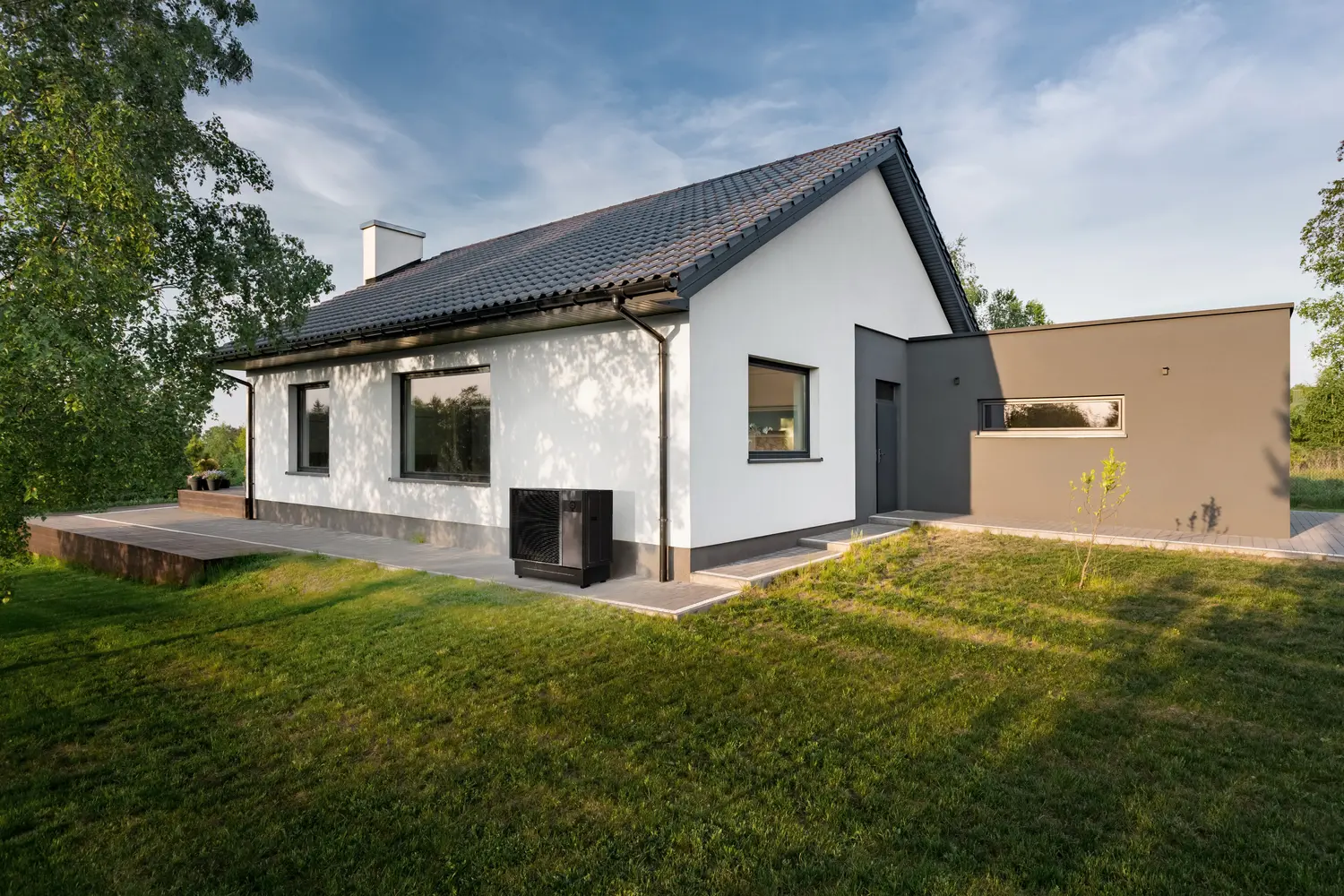
Thermia range
The new Thermia Elve with Idun indoor unit uses the natural refrigerant R290, reaches 75 °C flow temperature and produces up to 700 litres of hot water at 40 °C. The Thermia iTec XTR, from 1 to 16 kW, also uses R290 and works down to −25 °C. Datasheets are on our products page (in Spanish).
Frequently asked questions
What is an air-source heat pump?
An air-to-water heat pump takes heat from the outdoor air, raises its temperature and delivers it to the home as heating and hot water. It can also cool in summer.
Does it work in very cold weather?
It depends on the model. Thermia Elve and Thermia iTec XTR work with outdoor temperatures down to −25 °C. Performance drops in the cold, which is why sizing matters.
Is the outdoor unit noisy?
Every outdoor unit makes some noise. Thermia Elve declares 42 dB(A) sound pressure at 4 m in free field for the L model and 43 dB(A) for the XL. Placement relative to neighbours’ windows is part of the design.
Tell us about your project and we will tell you which system fits
The feasibility study is free and carries no obligation. We analyse the building, the ground and the heating and cooling needs.